Tuesday, August 09, 2011

Mr.Creativity Meets Mr. Commerce: My New E-book, "I,Cadaver" is Great and Just $2.99 with a Money-back Guarantee. Buy it Now!

  
Did I write that headline? Can't have. I'm a writer, not some money-grubbing flack.

Or... or... maybe it's time that Mr. Creativity and Mr. Commerce met, got to know each other, talked, and actually worked together.

Let's start with what Mr. Creativity brings to the table.

Take the cover of my new e-book, "I, Cadaver," shown above. The cover got its start some years ago when Bill Murray, a good friend of many years who lives on Nantucket, did a sculpture of my face. I know, MY face -- is the poor guy blind?


In a sense, yes.  A multi-talented artist, Bill does beautiful work in wood and in clay.  One day Mr. Creativity descended upon him. He felt an inexplicable urge, considering the subject, to do a clay sculpture of moi. 

Heeding the call, Bill did the sculpture and mounted it on a wooden pedestal. Here is a photo of the finished work, with its handsome subject. I think the sculpture is even better looking than the subject.


When I was looking for a different cover for "I, Cadaver," something drew me to Bill's sculpture. Being clay, it had a cadaverish pastiness.  But the eyes were open and there was a little smirk. A light went on in my head. It was that troublemaker, Mr. Creativity, flipping my switch.

Here was an image that was dead but not dead, with that little smirk promising all kinds of mischief in the anatomy lab of the UMass Medical School in Worcester, Mass. -- which is what "I, Cadaver" is all about, my after-life adventures as a cadaver.


I took Bill Murray's sculpture to another Bill, but with one L, Bil Gardiner of William Gardiner Photography, who is also a friend.  I told him that I was thinking of it as a cover for "I, Cadaver."

"What do you think?" I asked.


Mr. Creativity was instantly all over him, lighting up his eyes, animating his voice, shoving aside Bil's real-world concerns, including the prospect of losing his home of 10 years in the neighborhood in which he grew up.  

"Let me work on it," he said.

"Can't offer you money," I said.  "But if the book sells, you get money."


"I have a couple ideas," Bil said. "Leave the sculpture with me."


Over the next few days, Bil photographed Bill's sculpture and came up with a cover design, including picking the type, and handed me a CD with the finished cover.  I immediately e-mailed him that I thought it was a "terrific cover." 

The cover of "I, Cadaver" is a case study of Mr. Creativity in action. One idea leads to another, leads to another, leads to another and, like magic, an e-book has the cover above.

I have an overwhelming bias toward old-time Mr. Creativity. I'm a writer.  Always have been.  Always will be.  Aside from three years teaching in Africa, I have always earned my living through the written word as a writer and editor in the educational publishing industry.

I'm used to having everything I write appear in print.  On a whim in my early days, I wrote an About Men story for The New York Times Magazine and sent it in cold.  It was published as is (November 8, 1987)  and I got a check for $1,000, a lot of money in those days.  In my office at American Education Publications in Middletown, Ct., colleagues lined up outside my office with copies of the NYT Magazine for me to sign. 

During the 70's tennis boom, I teamed up with the tennis coach at Wesleyan University, Don Long, to write an instruction book on tennis, "Hacker's Handbook."  A major New York publisher, Grosset and Dunlap, bought the book on the basis of two sample chapters.  Don and I both received nice royalties for several years.  

The royalties gradually declined along with the tennis boom.  I knew the jig was up when I walked into the old Spags store in Shrewsbury, Mass. and found a barrel of my books on sale for 50 cents each.  Today, my tennis book is out of print and I have a single frayed copy in my home office.  Amazingly, a used copy is available online for $13.

And now Mr. Commerce.  The fact is that commercialism is the foundation not only of our economy, but of your life and mine. Everything depends on selling, from yourself (no social and work skills, no job),  a roof over your head (no home buyers, no homes), food on the table (no buyers of spinach, no spinach), books (no buyers of books, no books), etc, etc, etc.

Mr. Commerce is a merciless master. Defy him and you die. Just look at Borders Books.  It looked the other way while the market for print and paper books was being eviscerated by e-books and electronic reading devices -- and now Borders is closing its nearly 500 stores across the U.S.


I recently watched two of my grandkids, shown here, holed up in an armchair for a couple of hours enthralled with their new Nintendo DSI mini computer.  In the years ahead, Nathaniel and Aidan will naturally transition to reading e-books the way we used to read paper and print books.

Thousands of Borders employees are now out of jobs and must find new ones.  If a small family business can't sell its goods or services, a heartless Mr.Commerce says the business must close.  If "I, Cadaver," does not sell, he says: tough, the market doesn't want it; give it something it wants and needs like sex, scandal, violence, and celebrity worship.


"I, Cadaver," which has just gone on sale on Amazon.com and Barnes & Noble, is none of these.  It's about life, death, spirituality, and the hereafter. It's about you and me. It sees and celebrates a light side in this life and death of ours. And as for all the conventions surrounding death and what is done with our bodies, it contemplates all kinds of respectful mischief. 

Here is the Prelude: “Dead. Been a good life. Miss you all.  But doing something big for science and humanity -- a Final Gift. And, just so you know, I’m no run-of-the-mill cadaver just lying there on a slab. I got plans to shake things up in anatomy labs everywhere.”

Yet almighty Mr. Commerce demands that "I, Cadaver," like any other product or service, prove itself in the marketplace.  So be it. So I, disciple of Mr. Creativity, contrary to my nature and while holding my nose, say, "Let the  promotion and selling begin!"   

 Up to now, my track record for sales has been dismal.  I now have five e-books on sale, but only one, "Killers: Surprises Inside a Maximum Security Prison," has been selling. Below is the cover of "Killers," done by amateur me, followed by the book description.

"The author spends 23 hours locked up with inmates inside a maximum security prison, many of whom are convicted killers serving life or long terms. He arrives with certain attitudes, assumptions, expectations, and no little fear for his own safety. But as he meets convicts, eats prison food with them (or, more accurately, tries to do so but can't stomach it), sees their prison life up close, hears their stories, and gets to know them -- all without a correction officer in sight -- he gets surprise after surprise. One by one, his preconceptions fall away, except for one: prison life is hell."  
  
"Killers" sold 30 copies last month, its first month on sale.  Six were in England, which I find interesting.  My Amazon e-books are on sale in the U.S., Canada, England, Australia, and Germany. Thirty copies sold in a month may not sound like much, but it is a lot compared to none, that is, nada, for three of my e-books.

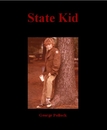
All have amateur covers.  What would they sell if they each had a professional cover done by, say, a Bil Gardiner?  All have had zero promotion.   What would "Killers," "I, Cadaver," and the other three e-books do with actual promotion? The other three are "State Kid: Hero of Literacy," and "Last Laughs."


Now, with the internet, e-books, and 20 million readers on devices like Amazon's Kindle and Barnes and Noble's Nook, the whole world of publishing has been turned upside down.  And e-book readers are multiplying in leaps and bounds. In 2008, e-books were 0.6 percent of the total book market; in 2010, when 114 million e-books were sold, they were 6.4%.  And this is just the beginning.

Even adults who never envisioned themselves reading an e-book are doing so.  Liz Belanger, pictured below, is one.  She received an Amazon Kindle for Mother's Day and says  she loves it. "I carry all the books I want to read around with me right here," she said, holding up her Kindle.

Her Kindle can carry a whole library, up to 3,500 books. It is lighter than a paperback, weighing only 8.7 ounces. Liz has her choice of 950,000 books, according to Amazon.  She can be reading any one of them in 60 seconds.


In the photo, Liz is reading a book on her Kindle while her friend Linda, my niece, reads an old fashioned paper and print book.  


"You know, I have a new e-book out,"  said Mr. Creativity brazenly self-promoting.


"Really?" she said, genuinely interested.


"Yes, it's called 'I, Cadaver.'  Just went on sale on Amazon and Barnes and Noble."


"Let me check it out," she said, tapping on her Kindle.  Within seconds, she was looking at Bil Gardiner's cover and a summary of the book.


To my pleasant surprise, Liz decided to buy "I, Cadaver" right then and there.  In less than a minute, she had a note from Amazon thanking her for her purchase.


She went further.  "Know what I'm going to do," she said.  I'm going to review it and send the review to all my friends on Facebook so they can buy it, too."


"Can't ask for anything more than that," I said. "Thank you.  Looking forward to your review."

This is how "I, Cadaver" has to be promoted,  through Facebook and other social media, and Liz affirmed it for me.


I knew about the phenomenon of Amanda Hocking, for example.  Fed up with attempts to find a traditional publisher for her young-adult paranormal novels, Hocking began self-publishing her novels as e-books on Amazon and Barnes and Noble.com a little over a year ago in March.

By May she was selling a few hundred. By June, her sales were in the thousands. She sold 164,000 books in 2010. Most were low-priced (99 cents to $2.99) digital downloads.  This past January she sold more than 450,000 copies of her nine titles.

Now Hocking, 26, who lives in Austin, Minn. has three titles in her Trylle Trilogy (Switched, Torn and Ascend, the latest)  in the top 50 of USA Today's Best-Selling Books list. In a little more than a year, she has achieved more than a million dollars in sales.

Hocking credits her success to aggressive self-promotion on her blog, Facebook and Twitter; word of mouth; and writing in a popular genre. Her books star trolls, vampires and zombies.

The message could not be more clear: e-books don't sell themselves -- they must be sold.  If I want "I, Cadaver" and "Killers" and "State Kid" and "Last Laughs" and "Schlep" to sell, I have to promote them.  I can't just create; I have to get my hands dirty -- in filthy, rotten commerce.  And, evidently, the best way to do that is through Facebook, Twitter, and other social media. 

And so my campaign begins.  Liz Belanger bought "I, Cadaver" on her Kindle and I saw her do it with my own two eyes.  Next she is going to review it on  Amazon where the book is displayed and offered for sale and where it will be seen by large numbers of potential readers. And then she is going to place her review on her Facebook page and urge all of her friends to buy it, review it, and urge their Facebook friends to do the same.

Can't ask any more than that. Mr. Commerce would approve.


Only sales can get a smile out of  this old grouch.   But the two of us are never going to work closely together because I am joined at the hip with Mr. Creativity. Instead of promoting on social media, here I am writing  the story of the inherent conflict between Mr. Commerce and Mr. Creativity. We are from two different planets.


What's that? Oh, it's Mr. Commerce.  He's demanding a final word. 

"Go ahead, then go away," I just told him.


"The book is 'I, Cadaver.'  Go on Amazon.com and buy it now -- or else! Then write a review and put it on your Facebook page and tell all your Facebook friends to buy 'I, Cadaver.' And, if you know what's good for you, you'll buy 'Killers,' too!  Got that? " Buy it 


Promotion. Don't you hate it?


So long and keep moving.

Labels: , , ,

Wednesday, August 19, 2009

Surging E-Books: The Beginning of the End of the Paper and Printed Book?


Around the corner from me, Tatnuck Bookseller closed about two years ago after more than 20 years and I still haven't gotten over it. Every time I drive by the cookie-cutter casual restaurant that has opened on the spot, I recall how much I used to enjoy going to Tatnuck Bookseller to browse, check out new books, and hang out.

There is nothing like wall-to-wall books. They fire up the brain. All that knowledge! All that adventure! They feed the soul. Any number of books beckoning to satisfy your deepest yearnings!

My wife Barbara, shown here reading, is a dedicated book reader. When a new book comes out that she wants to read, she gets it from the Worcester Public Library – free. She and millions like her expect her beloved books and the public library to go on as always. But, sorry dear, they may not – as we shall see.

While I read more newspapers, magazines, and online blogs than books, I occasionally ask Barbara to pick up a new book for me from the library. I'm too cheap to pay $27.50 for a new hardcover. At Tatnuck Bookseller, I used to dip into lots of different books and go away satisfied for the cost of a cup of coffee and The New York Times. Maybe if I and others like me were more willing to spring for $27.50 books, Tatnuck Bookseller would still be in business.

But the fact is that Tatnuck Bookseller is no more in my neighborhood (though it still has a struggling store in Westboro, MA.) and it's fate is shared by more and more booksellers across the country. The book industry is under pressure as never before.

Book publishers, though still pushing big-name authors (Dan Brown of the blockbuster “The Da Vinci Code”) and ghost-written, news-pegged books (by Joe the Plumber, by the mistress of Bernie Madoff) and $100 textbooks (in every college bookstore), are in a monumental struggle for survival.

Why? Price resistance for sure, in these hard times. Yet the high cost of books is no new problem. What is new is the recent, rapid rise of formidable new competition: Electronic Books.

After years of promise and little more, sales of E-books are soaring. They hit a record $24 million in June, a 136.2 percent increase from a year earlier. Sales of E-books are the fastest growing segment of book publishing, increasing 68.4% since 2007. These figures are from the Association of American Publishers.

The sharpest increases came early in 2008 just after the release of Amazon.com's Kindle. The Kindle is an electronic device that emulates a book and whose reading experience, in the words of Amazon's chief Jeff Bezos, makes the device “disappear.” The first two Kindle releases sold out quickly. In the first quarter of this year, Forester Research estimates that more than 900,000 Kindles were sold. (Amazon does not disclose Kindle sales.)

The Kindle -- thin, book size, 10.2 ounces, able to hold 200 full-length books – offers free wireless connection almost anywhere via Sprint 3G network. E-ink technology gives text a print-like appearance. It has a keyboard. It includes a Web browser. You can browse the Web, send and receive e-mail, and play games.

When you're reading a traditional book and come across an unfamiliar word, it's a pain to pause and flip through a 5-pound paper dictionary – if one happens to be at hand. The Kindle has a built-in dictionary. You just click on an unfamiliar word and its definition pops up. A built-in vocabulary-builder. Text too big or too small? You can adjust it.

With Kindle, an E-book from Amazon's vast digital library is available almost instantly, any time, from anywhere. No ten-ton printing presses. No “dead-tree” paper. No warehouse. No shipping and distribution. No big price. Just $9.99, even for bestsellers.

Yes, the Kindle is one hot 21st century digital communication tool. Oprah Winfrey told millions of her adoring fans that it is her “favorite new gadget.” No wonder the book industry is in a state of panic. It should be.

The Aug 3 issue of The New Yorker has a great article on the Kindle by Nicholson Baker. In the story, Baker describes how the Wall Street Journal cultural critic, Steven Johnson, was alone in an Austin, Texas restaurant with a Kindle 2 when he was “seized by the urge to read a novel.” Within minutes, thanks to Kindle's 3G hookup with Sprint wireless – called Whispernet – Johnson was reading “On Beauty” by Zadie Smith. The experience convinced Johnson that “writing and publishing would never be the same.”

Jacob Weisberg, the editor-in-chief of the Slate Group confided to Newsweek that for weeks he had been doing all his recreational reading on the Kindle 2. To him, the Kindle 2 offered a “fundamentally better experience” than did a paper and ink book. Weisberg said that he believed that Jeff Bezos had built a machine to make a cultural revolution.

For a still-young (45) former geek and Princeton graduate, this would be Jeff Bezos' second making of a revolution. The first was creating Amazon.com to sell books online, which made him a multibillionaire (along with his lucky parents who put up almost everything they had). And now, with the Kindle, he is out to revolutionize the book itself.

Bezos praises the traditional book as an admirable “perfection” that deserves to have thrived for centuries.Yet -- there is no polite way to say this -- his Kindle is out to kill the book as we know it. With the Kindle (along with new competitors -- read on) he is well on his way to doing so.

Jacob Weisberg has pronounced the book, after 500 years, to be on its deathbed. He said, “Printed books, the most important artifacts of human civilization, are going to join newspapers and magazines on the road to obsolescence.”

In an article in Slate entitled “How Kindle Will Change the World,” Weisberg wrote:
“The notion that physical books are ending their life cycle is upsetting to people who hold them to be synonymous with literature and terrifying to those who make their living within the existing structures of publishing. As an editor and lover of books, I sympathize. But why should a civilization that reads electronically be any less literate than one that harvests trees to do so? And why should a transition away from the printed page lessen our appreciation and love for printed books? Hardbacks these days are disposable vessels, printed on ever crappier paper with bindings that skew and crack. In a world where we do most of our serious reading on screens, books may again thrive as expressions of craft and design. Their decline as useful objects may allow them to flourish as design objects.”

Weisberg is less optimistic as to the fate of book publishers and, by extension, book sellers. He wrote:
“Amazon, which is selling most new books at a loss to get everyone hooked on the Kindle, will eventually want to make money on them. The publishers will be squeezed at best and disintermediated at worst. Amazon is already publishing Stephen King. In the future, it could become the only publisher a best-selling author needs. In a world without the high fixed costs of printing and distribution, as the distance between writers and their audiences shrink, what essential service will Random House and Simon & Schuster provide?”

E-books? Don't be surprised.

Amazon may be the first out of the gate in the race to capture the lion's share of the E-book market, but powerful competitors have quickly jumped in. Sony Electronics just introduced two new electronic reading devices to compete with Amazon's Kindle, Reader Pocket Edition and Reader Touch Edition. The new devices replace earlier and more expensive versions of the Sony Reader. They will sell for $199 and $299 respectively and will go on sale later this month.

Sony's devices are available in retail outlets like Wal-Mart and Best Buy, but their sales have lagged those of Amazon's Kindle, which is sold only online. To compete with Sony, Amazon recently reduced the price of the Kindle from $359 to $299. For its part, Sony has met Amazon's e-book price of $9.99.

Sony's new devices and price cuts may not be enough to help it catch up to Amazon. Unlike the Kindle, Sony's electronic readers cannot connect wirelessly to an E-book store. Owners of Sony readers must plug their devices into a computer to buy and download e-books. Sony has also not yet developed a version of its software for other devices like the iPhone.

Barnes & Noble, the country's largest bookstore chain measured by revenue, has also jumped into the nascent E-book market. Seeing the writing on the wall in the form of declining book sales and rising E-book sales, Barnes & Noble has announced that it will launch its own e-bookstore. It will sell bestsellers for $9.99, in line with Amazon.

Barnes & Noble says it will offer more than 700,000 titles (including 500,000 public domain books from Google Inc.), and expects to offer more than one million E-book titles within a year. Amazon.com's Kindle store currently sells about 300,000 E-books. Sony's E-book store sells about 300,000 E-books, while offering free access to about 500,000 out-of-copyright books collected by Google.

What Barnes & Noble has done is make the most of its greatest assets: physical stores and a strong national presence. It has integrated its physical stores and E-book store, primarily through the iPhone. At the moment, Kindle E-books cannot be read on iPhone and other electronic readers but soon will be.

If the paper and printed book is indeed on its last legs, that does not necessarily mean that Barnes & Noble is. It is a powerful national bookseller. If it can no longer sell books, it will sell E-books. It is either that or go the way of Tatnuck Booksellers around the corner from me.

Perhaps the single greatest force behind the seeming inevitability of eventual E-book supremacy are our young people. In their readiness to accept and adapt to new technology, they seem wired differently than earlier generations. Many of today's 12-year-olds have their own cell phones and routinely chat up their friends on Facebook and tweet them on Twitter. The internet to them is as natural as breathing.

Books? For many young people, books are stodgy throwbacks to their parents' school days, soooooo last century. The young woman shown here reading a Kindle on the beach is more normal. What voluntary reading they do is online.

They read old-fashioned books when they have to, when old teachers (pushing 30!) say they have to if they want to pass. They transition seamlessly from the paper book to the E-book.

Educators who have always revered the book and assumed that it was both essential in learning and would last forever, watch their young student texting and surfing the web on cell phones and other mobile devices – and see their world of books being turned upside down. Like Barnes & Noble, they must do a major transition from traditional school books to E-books or kiss professional lives goodbye.

Except for some veteran educators resisting the trend toward E-books (dead-enders?), education is moving headlong into an E-book future. In this not-too-distant future, high school students will carry in their backpacks not books but a laptop and an electronic reading device. They will be walking virtual libraries connected to electronic reading 24/7.

At Cushing Academy in Ashburnham, MA., that future is here. There 16-year-old Tia M. Alliy, who aspires to become a doctor or an engineer, is getting ready to begin her junior year. Like most of her friends, she does most of her school research online with her laptop. The laptop is a school requirement.

She rarely cracks open an actual book. Ditto her classmates, many of whom have never used a library card catalogue or checked a book out of a library. And now the library at Cushing Academy is a mirror image of them. This summer the library underwent extensive renovation to reflect this wholesale transformation in student reading and studying habits – away from paper and print and toward digital reading and learning.

The library at this independent, coed boarding school has been transformed into a cybercafe and coffee shop, with a faculty lounge for more interaction between teachers and students. The library's 20,000 traditional volumes are being replaced by electronic texts, and E-readers – such as the Kindle. The books are being donated to other area schools and charities. Soon the library at Cushing Academy will be virtually bookless.

Headmaster James Tracy, an avowed book lover, finds a bookless library exciting. He says that the library is “going from 20,000 books to millions.” He says he loves the idea of “carrying in the palm of my hand the entire Library of Congress. As a lifelong learner, there is nothing more exciting.”

At the college level, the $100 and even $200 textbook is common. For decades, publishers and authors of college textbooks have fed on a largely captive market. If a $200 textbook is required for a course, the student has had no choice but to buy that book. Professors routinely assigned their own books and colleges have traditionally looked the other way.

Serving what economists call a “non-elastic” market in which customers have no choice but to buy, textbook prices have risen much faster than inflation. Financially, it has been sweet for textbook publishers and authors but decidedly bitter for college students and their families struggling to pay for college.

But now, with a surge in E-textbook sales, traditional textbook publishers are rushing to defend their lucrative turf in college bookstores. Pearson Publishing, the largest textbook publisher in the U.S., is in the forefront. Wendy Spiegel, a Pearson spokesperson, said, “We believe the world is going digital, but the jury's still out on how this will evolve. We're agnostic, so we'll provide digital, we'll provide print, and we's see what our customers want.”

Much will depend on California and Texas, which together dominate the nation's textbook market. As these states go, so do most other states. This summer California has announced an initiative that would replace some science and math texts with free “open source” digital versions. California hopes to save hundreds of millions of dollars a year – money that big publishers like Pearson will not be getting.

“In five years, I think the majority of students will be using digital textbooks, “said William M. Habermehl, superintendent of the 500,000-students Orange County, Calif. Schools. “They can be better that traditional textbooks.”

Eyes squarely on the rich textbook market, Amazon.com this June came out with a bigger machine, the Kindle DX. There are new pilot programs at several universities, including Jeff Bezo's almer mater, Princeton, testing the Kindle DX's potential as a replacement for textbooks.

Bezos also sees the Kindle DX as the new digital platform for struggling newspapers, such as The New York Times. I read The New York Times every day and have done so for a half century. Am I addicted? I guess.

But I am tired of paying its price, which has gone up faster than even college textbooks. Six bucks for the Sunday Times is too rich for my blood. It was $3.50 two years ago. I can subscribe to the Times on the Kindle DX for $13.99 a month.

Meanwhile, the big general-interest book publishers are taking a deep breath and diving into the E-book waters. After dithering for weeks, Knopf Doubleday Publishing Group just announced that it was going to release Dan Brown's new book, “The Lost Symbol”(a follow-up of his blockbuster novel “The Da Vinci Code”) as an E-book “simultaneously with the hardcover on September 15.”

I don't have a Kindle ... yet. I can't bring myself to pay $299 ... yet. It's not easy being an old tightwad. But, just as Tatnuck Bookseller had to sell books or die, I have to read or die.

There is no question that it is only a matter of time before I dig painfully in my pocket and give in to the inevitable and buy a Kindle – and read E-books and my beloved New York Times on an electronic reading device that I carry everywhere and can't live without.

So long and keep moving.

E-Books by George Pollock
 
"State Kid: Hero of Literacy" is fiction based on his  real-life experiences  growing up in foster homes; "Last Laughs," is the true story of how five foster kids (he and four younger siblings) found their way in life and each other. "Killers: Surprises in a Maximum Security Prison," is the story of the author being locked up for 23 hours with killers in a maximum security prison;  "I, Cadaver" is about the author's postmortem adventures and mischief in the anatomy lab at UMass Medical School. “A Beautiful Story” demonstrates the art and process of creative writing as a 16-year-old boy goes all out to write a story good enough to get him into an exclusive college -- on full scholarship; and "A Long, Happy, Healthy Life," which is about how to live the title every single day.

P.S. Hey, I gotta live, don't I? That reminds me of a story. Years ago when I was an editor at an educational publishing company, I was begging my boss for a raise. “I got a wife and kids, a mortgage, bills,” I whined. “I gotta live, don't I?” He paused, leaned forward, and said evenly, “not necessarily.”

Labels: , , , , , , ,